Is your fuel ready for winter?
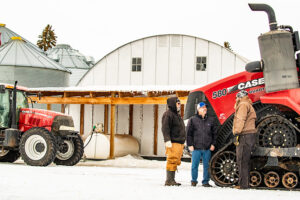 A winter-ready operation starts with winter-ready fuel. Choosing the right winter blend and planning ahead for colder temperatures can help support reliable equipment performance throughout the season.
Learn four ways to prepare your fuel for winter.
1. Know what’s in your tank
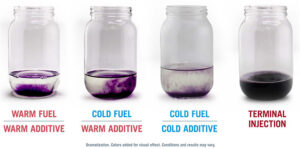
Before temperatures drop, understand the cold-weather properties of your current fuel including its cloud point. This can be done through fuel sampling. A diesel fuel’s cloud point is the temperature at which wax crystals begin to appear, and that temperature varies by fuel.
Also consider how much fuel remains in your storage and equipment tanks. Adding winterized diesel to non-winterized fuel changes the properties of the final mixture. Your local Cenex® dealer can help you plan the transition based on your existing fuel and anticipated conditions.
2. Choose a blend suited to your winter
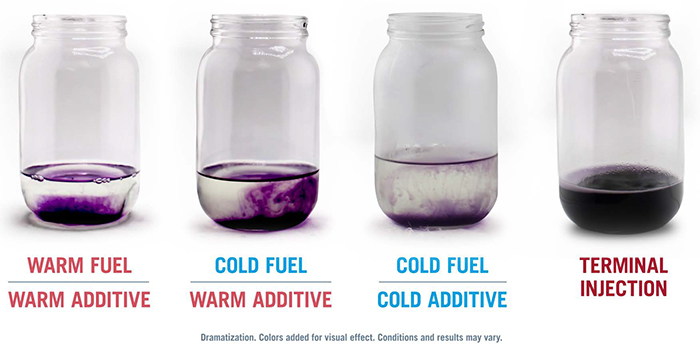
Winter blending helps prepare diesel for lower temperatures. Blending #1 diesel with #2 diesel can help improve its cold-weather properties. Additives like cold flow improvers (CFIs) can also help manage wax crystals and support fuel flow.
Cenex® Seasonally Enhanced® fuels are formulated for changing seasonal needs, while Cenex® Wintermaster® is designed for more demanding winter conditions. Work with your Cenex dealer to select the right winterized premium diesel fuel for your equipment and operating environment.
3. Make the transition before the temperature drops
The best time to prepare your fuel is before cold weather arrives. Planning ahead gives you time to account for remaining fuel, coordinate deliveries and establish an appropriate winter blend.
If cold weather has already arrived, don’t assume a fresh delivery alone will address the fuel already in your tank. Ask your Cenex dealer about the steps needed to transition your supply for expected temperatures.
4. Keep water out of the equation
Preparing fuel for winter also means paying attention to water. Water freezes at 32 degrees Fahrenheit and can restrict fuel flow before the diesel itself reaches its cloud point.
Check storage tanks and fuel systems for water, and if water is present, ensure you safely and properly dispose of it.
Make fuel part of your winter preparation
A winter-ready operation starts with winter-ready fuel. Selecting an appropriate blend, planning your transition and managing water can help support reliable equipment performance when temperatures fall.
Contact your local Cenex® dealer to help get your fuel, and your operation, ready for winter.